I have signed up for a dynamic electricity tariff that has different electricity rates at different times.
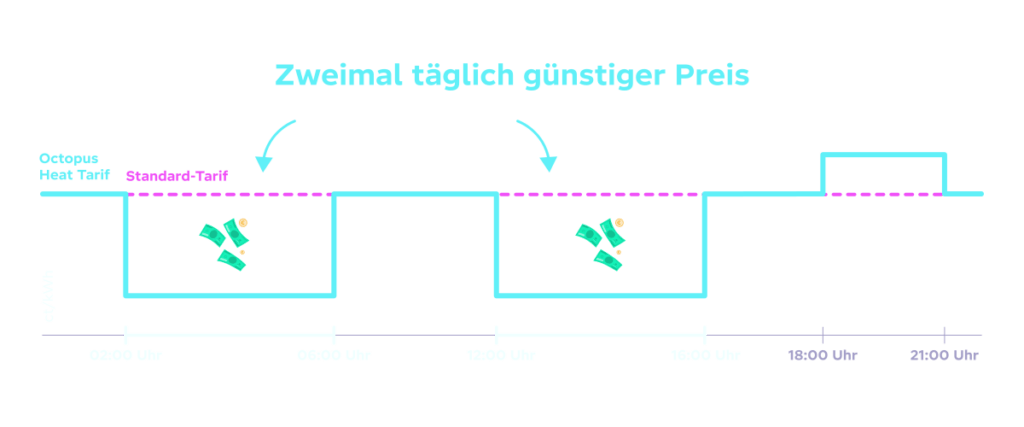
Twice a day, between 2:00 a.m. and 6:00 a.m. and between 12:00 p.m. and 4:00 p.m., I pay a low rate; between 6:00 a.m. and 12:00 p.m. / 4:00 p.m. to 6:00 p.m. / 9:00 p.m. to 2:00 a.m., I pay a medium rate, and only between 6:00 p.m. and 9:00 p.m. do I pay a high electricity rate.
I have a Lambda heat pump as a large consumer, and cooking usually takes place during the expensive time window, which also requires a lot of energy.
So I have to a) use my battery storage on the Deye inverter to store enough energy so that I don’t have to buy additional electricity during the expensive time window, and
b) control the Lambda so that it runs as economically as possible during the expensive time window.
I have an 8kW SUN-8K-SG04LP3-EU Deye inverter installed with two Felicity 12.5kWh (LUX-E-48250LG03) battery storage units, so I have 25kWh of battery storage available.
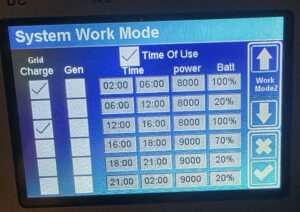
The Deye WR offers the option of charging the battery on a time-controlled basis (TOU Time Of Use).
Here I have shown the times for the electricity tariff. During the low-cost time slots, the battery should be charged to 100%. During the time slot with medium electricity costs before the very expensive time slot, the battery should only be discharged to 70% so that there is enough energy available from the battery for the time slot with the expensive tariff.
In the first attempt, the Deye only charged the battery at 1.5 kW.
I have a somewhat unusual configuration, with a micro inverter connected to the Deye’s generator input. I did this because I need three strings due to the shading situation on the roof, but the Deye can only handle two strings. So some PV modules are connected to a micro inverter, which in turn is connected to the Deye’s generator input. It’s a pragmatic solution that works great.
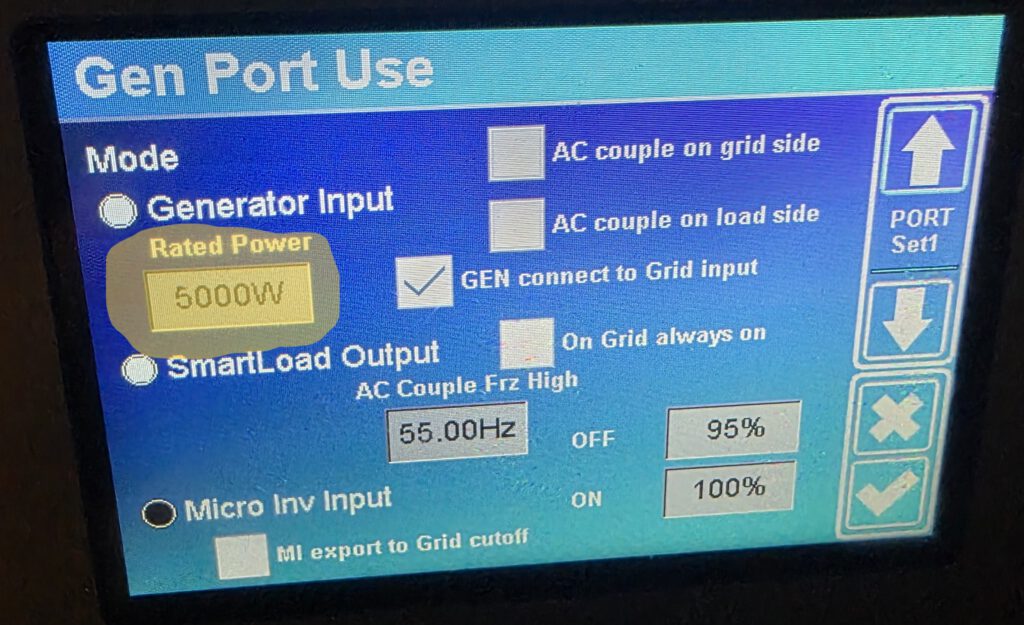
However, there is an option in the generator menu that limits the battery’s charging power, even when charging from the mains. Super intuitive 🙁
After increasing it, the battery is charged with exactly the power I specify.
There is still one potential pitfall: the time on the Deye must be reasonably accurate, otherwise the schedule will be disrupted.
This completes the first part. Next up is optimizing the lambda, and I will also be testing control of the Deye WR via Home Assistant or Evcc soon.